

(586) 323-9300

FUNGICIDE TREATMENTS

Why do I have a fungus in my lawn?

Turf diseases almost always first appear as a brown ring or spot in a relatively healthy, green patch of grass. Diseases can appear in your lawn at different times of the year depending upon the type of grass you have. The diseases that attack cool season grasses like tall fescue and Kentucky bluegrass are worse during the late spring and summer months (May, June, July and Aug). Most of these diseases are intensified when the lawn has excessive moisture from rain or irrigation.

There are a wide variety of turfgrass diseases near you

Identification can be hard, not every brown spot or brown area in a lawn is caused by an insect. Many things can cause brown areas in the lawn, such as heat, drought, shade, dogs, traffic, soil issues, root zone issues, herbicides, etc. It can be difficult to determine the difference between an insect and some other problem that is causing your damage to your lawn. Our experienced lawn technicians will be able to help you determine what is causing your lawn to decline and develop a solution for you.

COMMON LAWN DISEASES NEAR YOU!

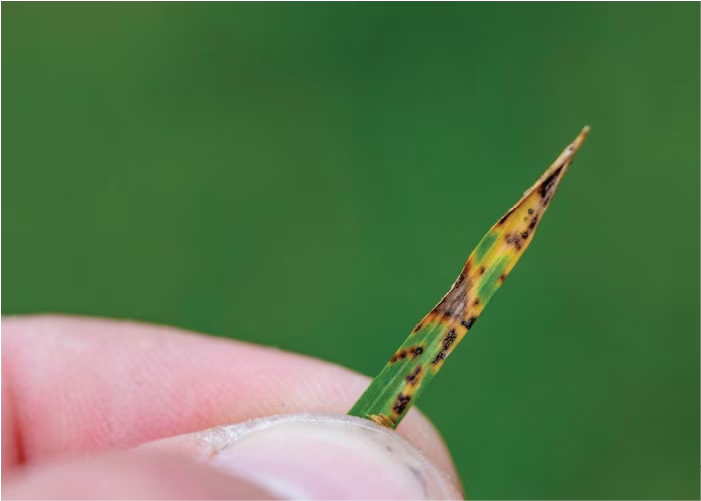
The first sign of the disease appears as tiny yellow spots on individual grass blades. The spots expand to a tan band with dark reddish-brown barriers. The tip of the affected leaf will often remain green. The tan lesion is often narrower than the leaf, resulting in the lesion taking on an “hourglass” shape. The entire blade soon becomes bleached. As the grass dies and the infected areas enlarge, light straw-colored spots 2″-3″ in diameter appear in the lawn. A fine white mycelium may be visible early in the morning when heavy dew is present. The turf in these areas may die off and affected areas may need to be seeded.

This fungi usually first invade the leaves, producing small brown spots. As the disease worsens, the spots on the leaf blades expand and produce a dark purplish-red oval border around a tan center. The spots enlarge until the entire width of the leaf blade is blighted. The leaf-spotting or leaf-blighting phase is less damaging to the turf grass than the melting-out (crown and root-rot) phase of the disease. In melting out, the crowns and roots are damaged, causing severe thinning of the turf. Affected areas may need to be seeded.

From a distance, red thread symptoms appear as circular patches of tan or pink turf about 4″-8″ in diameter. The pink color is caused by the flocks of pink mycelium on the leafs blades. Red thread most commonly affects Kentucky bluegrass, perennial rye grass, tall fescue and thin fescue. Disease development occurs over a relatively wide range of conditions (40-80 degrees), typically in the spring and fall, especially during long evening dew periods. Turf in the affected areas may die off and could need to be seeded.

On high-cut turf, patches may be from a few inches up to several feet in diameter and circular. In early morning on dew covered turf, white mycelium of fungus can often be seen on and between grass leaves and stems in the patch. Sometimes all the grass within the patch is killed, creating a sunken or “pocket” effect. Occasionally, no circular pattern can be seen, and the disease appears as a diffuse blight. On tall fescue symptoms of brown patch can be observed on individual leaves and not necessarily in patches. Symptoms on leaves appear as irregular tan or light brown lesions surrounded by dark brown borders. In severe cases, the entire lawn may look discolored and thin. Affected areas may need to be seeded.

Ascochyta leaf blight can cause large irregular patches of turf to quickly turn straw-brown in color and appear dead. From a distance the symptoms resemble drought stress or fertilizer burn. The difference is that the symptoms of ascochyta mat appear quickly or sometimes even overnight. Infected leaves present a bleached tip die back and the margin between healthy and disease shows a slightly pinched appearance. Some Leaves may have uniform lesions that affect the entire leaf blade. Although ascochyta looks horrible it will not cause long term harm to your lawn.

Make sure to keep the lawn cut at a healthy height (3″-4″) and watered regularly and this disease will recover within 2-3 weeks.

Necrotic Ring Spot is caused by the fungus Leptosphaeria korrae. Necrotic ring spot is especially prevalent in vigorously growing lawns. These lawns often develope a thick layer of thatch, which stimulates fungal growth . Necrotic ring spot is also common in lawns that have layered soil: one to two inches of topsoil laid down over hard compact native soil, but not mixed together. This effect produces a lawn with shallow roots and poor drainage. Kentucky bluegrass and fescues are the most common grass types to be infected. Affected areas may need to be seeded.

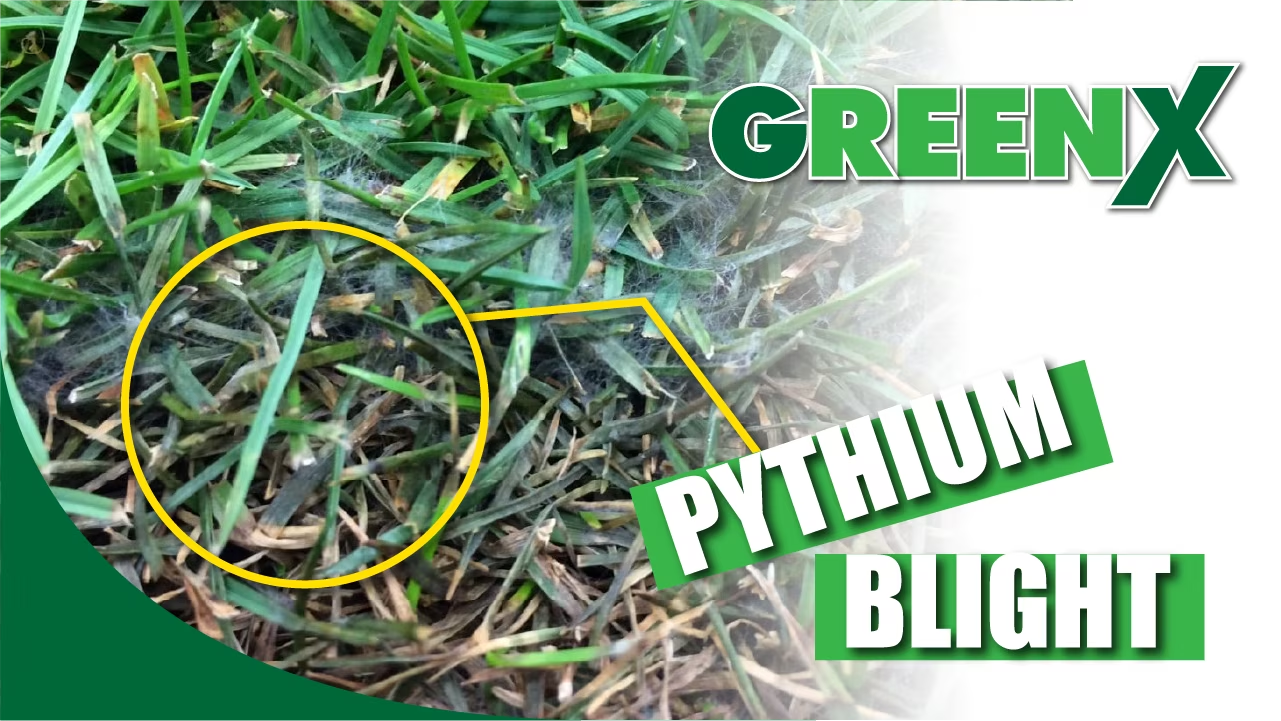
Pythium first appears as circular reddish-brown spots in the turf, ranging from 1″-6″ diameter.In the morning dew. Infected leaf blades appear water soaked and dark and may feel slimy. When spots are wet with dew, purplish gray or white cottony fungal mycelia can be seen on the outer margins of the spots. Infected grass plants collapse quickly, and when conditions are conductive, spots may coalesce and large areas of turf can be lost in a short period of time (overnight) Affected areas may need to be seeded.

What They Say.

Check out our what our current customers have to say about GreenX Lawn and Tree Care

Ready to Experience the GreenX Difference?

Ready to Experience the GreenX Difference?

Service Map

GreenX Lawn and Tree Care is your go-to solution for premier lawn care services in South East, MI. We understand the significance of a well-maintained lawn, which is why our expert team is dedicated to providing expert services tailored to your needs. With our comprehensive approach to lawn care, we ensure your lawn remains healthy, vibrant, and visually stunning throughout the year.
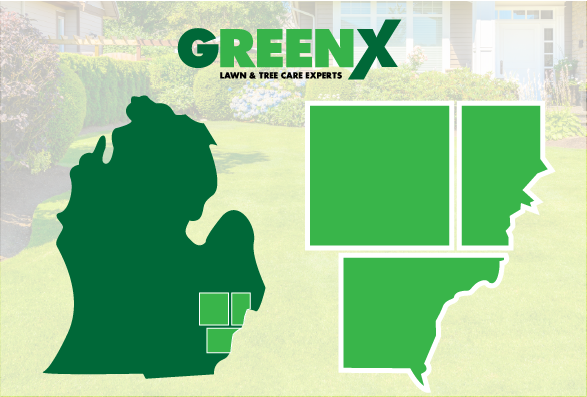
Service Map
OAKLAND COUNTY MACOMB COUNTY WAYNE COUNTY

OAKLAND COUNTY

Berkley, Beverly Hills, Birmingham, Bloomfield Hills, Clawson, Ferndale, Franklin, Hazel Park, Huntington Woods, Lake Orion, Lakeville, Leonard, Madison Heights, Oakland Township, Rochester, Pleasant Ridge, Rochester Hills, Royal Oak, Southfield, Troy, West Bloomfield

MACOMB COUNTY

Bruce, Center Line, Chesterfield, Eastpointe, Fraser, Harrison Twp, Macomb Twp, Mount Clemens, New Baltimore, New Haven, Richmond, Romero, Roseville, Shelby Twp, St. Clair Shores, Sterling Heights, Utica, Warren, Washington Twp

WAYNE COUNTY

Grosse Pointe, Grosse Pointe Park, Grosse Pointe Farms