


(586) 323-9300

INSECTICIDE TREATMENTS

Why are insects killing my lawn?

There are many different types of insects that can cause significant damage to your lawn. Although there are many different types of insects that can affect the health of your lawn, they all pretty much are there for the same reason. Insects use your lawn as a breeding zone. They mate, feed on the grass, lay their eggs, and newly hatched larvae emerge to a safe home (your lawn) to continue this process which can unfotunately cause extensive damage to your lawn.

Turfgrass insects near you

Identification can be hard, not every brown spot or brown area in a lawn is caused by an insect. Many things can cause brown areas in the lawn, such as heat, drought, shade, dogs, traffic, soil issues, root zone issues, herbicides, etc. It can be difficult to determine the difference between an insect and some other problem that is causing your damage to your lawn. Our experienced lawn technicians will be able to help you determine what is causing your lawn to decline and develop a solution for you.

COMMON LAWN INSECTS NEAR YOU.

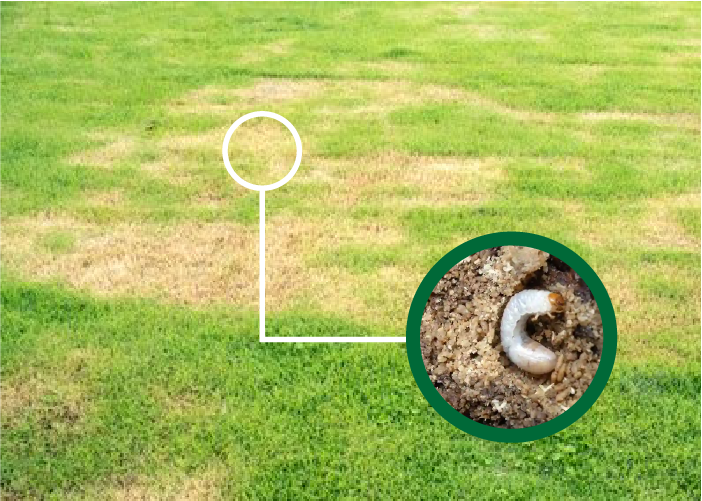
Heavy grub infestations can destroy grass roots, causing the affected area to become spongy, which allows the sod to be rolled back like a piece of carpet. Evidence of grub damage, including patches of dead or dying turf, are visible during spring (April and May) and late summer and fall (September and October). A Good indication of a grub infestation is the presence of skunk/raccoon digs and bird feeding on grubs. Affected areas may need to be seeded.

Sod Webworm larval damage often is observed as small brown patches. The most severe damage usually occurs in July and August. Overwintering larvae may also cause damage in the spring. Larvae chew off leaves and stems just above the crown. As webworm larvae continue to grow and feed, the injured areas enlarge and coalesce into big, brown patches. Fine fescue, Kentucky bluegrass, and other species are susceptible to Sod Webworm damage. Affected areas may need to be seeded.

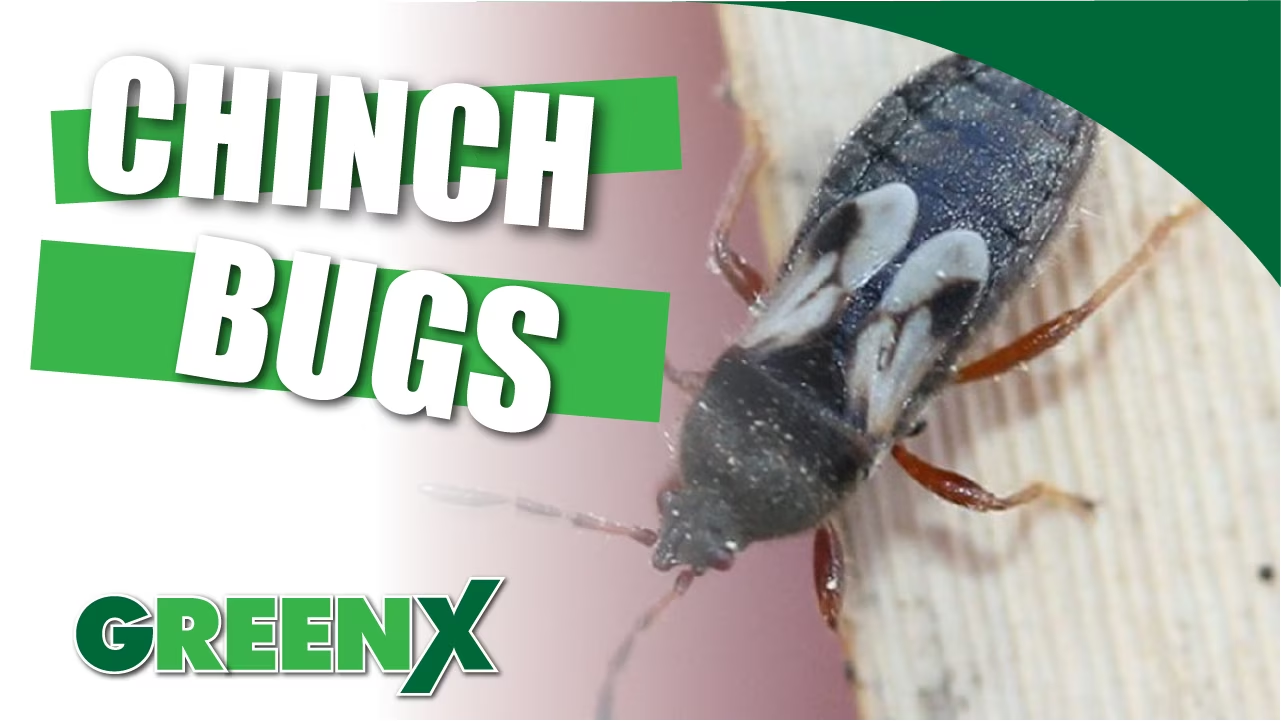
The Presence of irregularly -shaped yellow patches that turn brown and die is a characteristic of chinch bug injury. Plant damage results not only from withdrawal of sap from the grass blade, but from chinch bug saliva, which contains substances toxic to the plant. Drought or heat stress may cause similar browning of turf, but proper watering will quickly rejuvenate the lawn. Turf injured by chinch bugs will not recover as quickly and may need to be seeding.

In spring and fall the European Crane Fly larvae consume enough turf roots, stems and leaves to cause visible injury to lawns. Turf damage begins to appear as a general thinning of the infested turf, but may progress to large dead patches.

Billbug damage can be seen as circular and irregular shaped patches of brown turf. The bluegrass billbug most commonly attacks Kentucky bluegrass or Poa pratensis, but may attack fescue and rye grasses as well. Damage occurs near the driveway and sidewalks in June and August. Billbugs can be easily misdiagnosed as grubs, as the larvae and damage look almost identical. Billbug larvae cause the most damage by feeding inside the grass stem, at the crown or on the roots. Affected areas may need to be seeded.

Armyworm damage is identified by circular to irregular shaped patches of brown matted down turf. Armyworms are roughly the size of a quarter lengthwise. Damage can appear quickly, often overnight. Armyworms have been known to eat up to a whole football field of turf in 3-4 days. The Armyworm most commonly attacks bentgrass and other fine fescues. The Larvae will begin feeding on the grass blades down to the crown causing scalping and overall severe damage to the turf. Affected areas may need to be seeded.

Cutworm larvae are hairless caterpillars with black markings along the head and body. They grow to about 0.2 inch wide and 1.5-2 inches long. Cutworms overwinter in southern states and the adult moths will migrate North and arrive in Michigan early to mid-June where they will complete 1-3 life cycle per season. Cutworm damage is identified by circular to irregular shaped patches of brown matted down turf. Pencil sized holes in the soil may be found. Affected areas may beed to be seeded.

What They Say.

Check out our what our current customers have to say about GreenX Lawn and Tree Care

Ready to Experience the GreenX Difference?

Ready to Experience the GreenX Difference?

Service Map

GreenX Lawn and Tree Care is your go-to solution for premier lawn care services in South East, MI. We understand the significance of a well-maintained lawn, which is why our expert team is dedicated to providing expert services tailored to your needs. With our comprehensive approach to lawn care, we ensure your lawn remains healthy, vibrant, and visually stunning throughout the year.

Service Map
OAKLAND COUNTY MACOMB COUNTY WAYNE COUNTY

OAKLAND COUNTY

Berkley, Beverly Hills, Birmingham, Bloomfield Hills, Clawson, Ferndale, Franklin, Hazel Park, Huntington Woods, Lake Orion, Lakeville, Leonard, Madison Heights, Oakland Township, Rochester, Pleasant Ridge, Rochester Hills, Royal Oak, Southfield, Troy, West Bloomfield

MACOMB COUNTY

Bruce, Center Line, Chesterfield, Eastpointe, Fraser, Harrison Twp, Macomb Twp, Mount Clemens, New Baltimore, New Haven, Richmond, Romero, Roseville, Shelby Twp, St. Clair Shores, Sterling Heights, Utica, Warren, Washington Twp

WAYNE COUNTY

Grosse Pointe, Grosse Pointe Park, Grosse Pointe Farms